


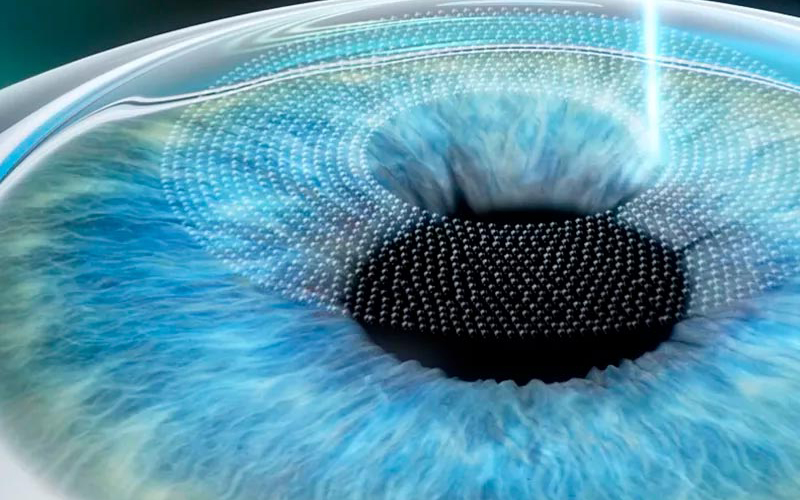
Femtosaniye Lazer Destekli Kornea İçi Halka Tedavisi (Femto-ICRS)
1. Kornea İçi Halka Tedavisi (ICRS) Nedir?
- Kornea içi halka tedavisi, korneal eğrilik bozukluklarını düzeltmek ve görme keskinliğini artırmak için kullanılan bir cerrahi prosedürdür.
- Bu tedavi, korneanın içine yerleştirilen halka şeklinde implantlar aracılığıyla korneanın kalınlığını ve şeklini değiştirerek etki eder.
2. Femtosaniye Lazer Destekli ICRS (Femto-ICRS):
- Femto-ICRS, femtosaniye lazer teknolojisinin kullanıldığı bir ICRS yöntemidir.
- Femtosaniye lazer, kesilerin daha hassas ve öngörülebilir olmasını sağlar, bu da tedavinin başarısını artırır.
3. Femto-ICRS Prosedürü:
- Femto-ICRS prosedürü, lokal anestezi altında gerçekleştirilir.
- Femtosaniye lazer, kornea içine halka şeklinde implantların yerleştirileceği tünelleri oluşturmak için kullanılır.
- Bu kesilerin hassas bir şekilde yapılması, implantların doğru konumda yerleştirilmesini sağlar.
4. Femto-ICRS ve Riboflavin:
- Femto-ICRS işlemi sırasında, korneaya riboflavin damlatılarak UV ışığına maruz kalınır.
- Riboflavin ve UV ışığı etkileşime girerek, korneanın çapraz bağlanmasını artırır ve stabilizasyon sağlar.
5. Femto-ICRS Sonrası İyileşme:
- Femto-ICRS sonrası iyileşme süreci, geleneksel ICRS prosedürüne benzer.
- Hastalar genellikle hafif rahatsızlık, kızarıklık ve geçici bulanık görme yaşayabilir.
- Tam iyileşme birkaç gün ila birkaç hafta sürebilir ve göz doktorunun talimatlarına uyulması önemlidir.
6. Uygun Adaylar:
- Femto-ICRS, keratokonus veya diğer korneal eğrilik bozuklukları olan hastalar için uygun adaylardır.
- Kontakt lens veya gözlük kullanımı ile görme düzeltilmediğinde tercih edilir.
7. Femto-ICRS'nin Etkinliği ve Avantajları:
- Femto-ICRS, geleneksel ICRS prosedürüne göre daha hassas kesilerin yapılmasını sağlar.
- Bu, implantların daha doğru bir şekilde yerleştirilmesini ve tedavinin başarısını artırır.
- Femto-ICRS'nin etkinliği, keratokonusun şiddeti ve tedavi sonrası bakım gibi faktörlere bağlı olarak değişebilir.
8. Femto-ICRS'nin Riskleri ve Komplikasyonları:
- Femto-ICRS işlemi genellikle güvenlidir, ancak enfeksiyon, korneal ödem, implant kayması ve astigmatizma gibi riskler bulunabilir.
*Femto-ICRS, korneal eğrilik bozukluklarını düzeltmek ve görme keskinliğini artırmak için etkili bir yöntemdir. Ancak, her hasta için uygun olup olmadığı ve tedavi sonuçlarının ne olacağı bireysel olarak değerlendirilmelidir. Bu nedenle, Femto-ICRS tedavisi hakkında detaylı bir değerlendirme yapılması ve doktorun önerilerine uyulması önemlidir.